Your Cart is Empty

For most car campers, foam is the better choice. A memory foam mattress like the HEST Foamy can't deflate, needs no pump, and insulates you from a cold car floor with an R-value of 8.8. Inflatable mattresses win on packed size and adjustable firmness, but they can puncture and lose pressure when the temperature drops.
When it comes to car camping, your mattress might be the most important piece of gear you pack. Both types have their perks and their trade-offs, and the right choice depends on your adventure style, your vehicle, and your comfort priorities. Let’s break it down so you can make the best call for your setup.
By HEST · Updated October 2026
👉 Looking for the full breakdown of car camping mattresses? Check out our Best Mattress for Car Camping guide.

Best for:SUV and wagon campers, truck bed setups, cold-weather campers, and anyone who prioritizes all-night comfort over packability.
Best for:Occasional warm-weather trips, road trippers with very limited storage, or campers balancing car and tent setups.
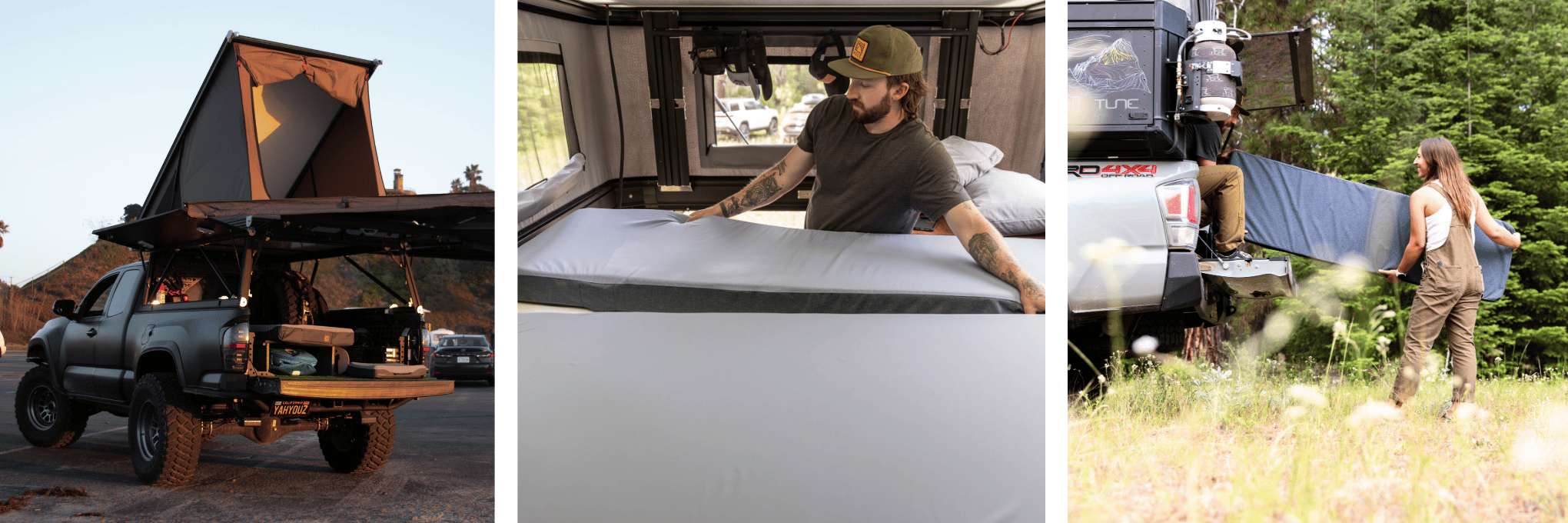
Some systems combine foam and inflatable layers, giving you cushion, warmth, and adjustability in one. They strike a balance, but they usually cost more, take several minutes to inflate, and still have an air layer and valve that can leak.
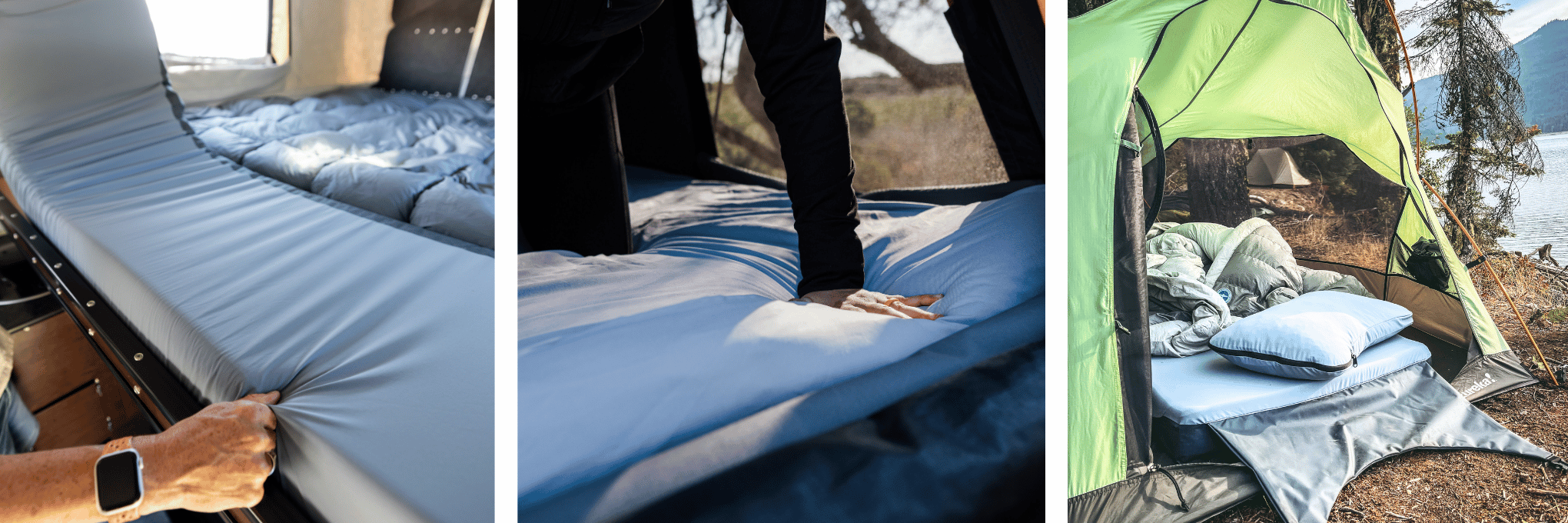
We’ve tested both in real-world adventures, from alpine lakes to desert roads. Foam consistently delivers the closest thing to your bed at home, while inflatables win on space-saving.
That’s why HEST focuses on premium foam-based designs, like the HEST Foamy for SUVs and the HEST Sleep System when you want maximum warmth. Built with temperature-resilient memory foam and waterproof bases, they bring comfort and durability together in one system.
Most car camping mattresses fall into four types. Here’s how they compare on the things that matter when you’re sleeping in or next to your vehicle.
| Type | Warmth | Setup | Can it go flat? | Adjustable firmness | Packed size |
|---|---|---|---|---|---|
| Memory foam (HEST Foamy) | High: R-value 8.8 | Unroll, about 30 seconds, no pump | No | No | Bulkiest |
| Air mattress | Low: cold air pulls heat away | Pump required, a few minutes | Yes: leaks, punctures, pressure loss in the cold | Yes | Smallest |
| Self-inflating pad | Varies widely by model | Open the valve, wait several minutes, top off | Valve and air chamber can leak | Yes | Medium |
| Foam and air hybrid | Varies, premium models are very warm | Inflate or self-inflate, then adjust | Air layer and valve can leak | Yes | Medium |
Where each one wins. Air mattresses pack the smallest and cost the least. Self-inflating pads and hybrids can be very warm and let you fine-tune firmness. The HEST Foamy is the only type with no air at all: nothing to inflate, no valve to fail, and nothing to lose pressure when the temperature drops. It’s ready in about 30 seconds and backed by a 5-year warranty.
The trade-off. Foam doesn’t let you adjust firmness, and it rolls up bulkier than an air pad. If you want to dial in firmness or need the smallest packed size, air or self-inflating makes sense. If you want a bed that’s ready the second you park and works the same way every night, foam is the better bet.
No matter your setup, the right mattress is the difference between “getting through the night” and actually resting, recovering, and waking ready for adventure.
If you’re running a full van build, see our Best Mattress for a Sprinter Van guide.
👉 Want sizing, setup tips, and picks for your SUV or car? Read Best Mattress for Car Camping.
Tent camping or backpacking? See memory foam vs. air mattress for camping.
Is foam or inflatable better for car camping?
Foam is the better choice for most car campers. It can't deflate, needs no pump, stays quiet when you move, and insulates you from a cold car floor. Inflatable mattresses pack smaller and let you adjust firmness, but they can puncture and lose pressure in the cold.
What's the warmest type of car camping mattress?
Memory foam, premium self-inflating pads and foam-and-air hybrids can all be warm enough for cold-weather camping, while basic air mattresses are the coldest. The HEST Foamy has an R-value of 8.8 and keeps its warmth with no air layer that can lose pressure overnight.
What's the difference between a self-inflating pad and a memory foam mattress?
A self-inflating pad combines foam with an air chamber and a valve. You open the valve, let it fill over several minutes, and top it off to adjust firmness. A memory foam mattress like the HEST Foamy has no air inside, so it's ready as soon as you unroll it and has no valve to leak.
Does a foam camping mattress need a pump?
No. A memory foam mattress like the HEST Foamy has no air inside, so you unroll it and it's ready in about 30 seconds. There's no pump to pack, no valve to open, and nothing to top off during the night.